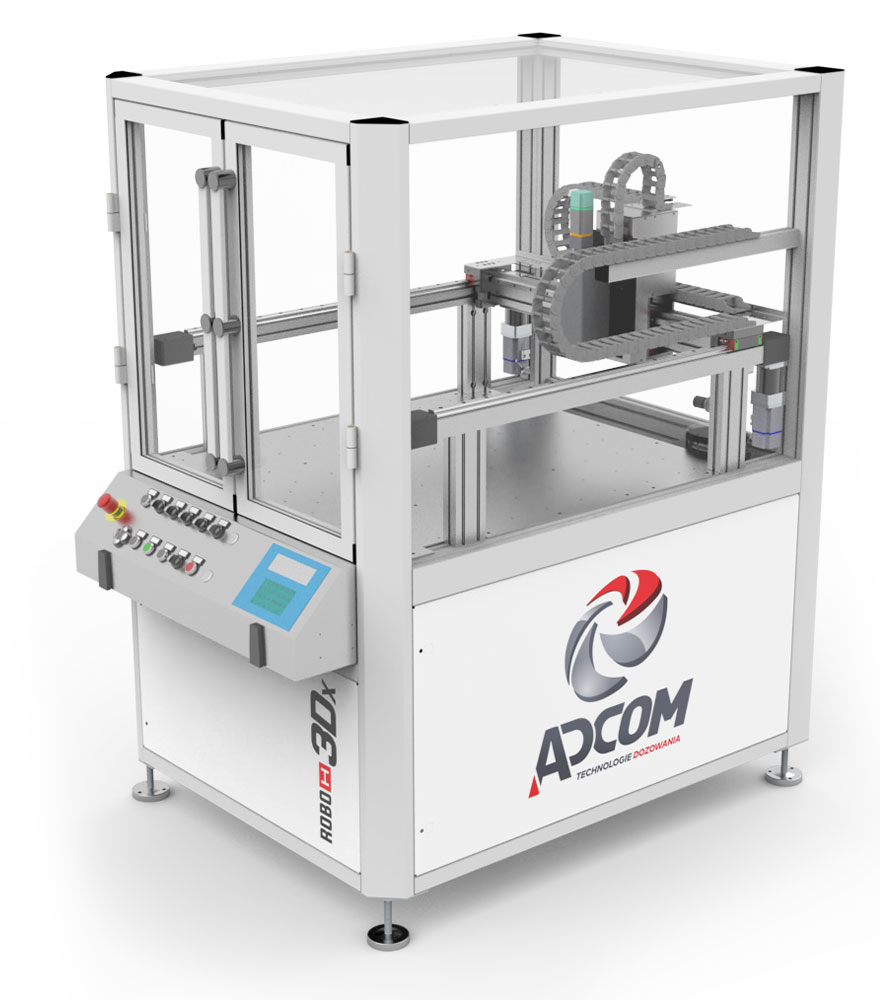
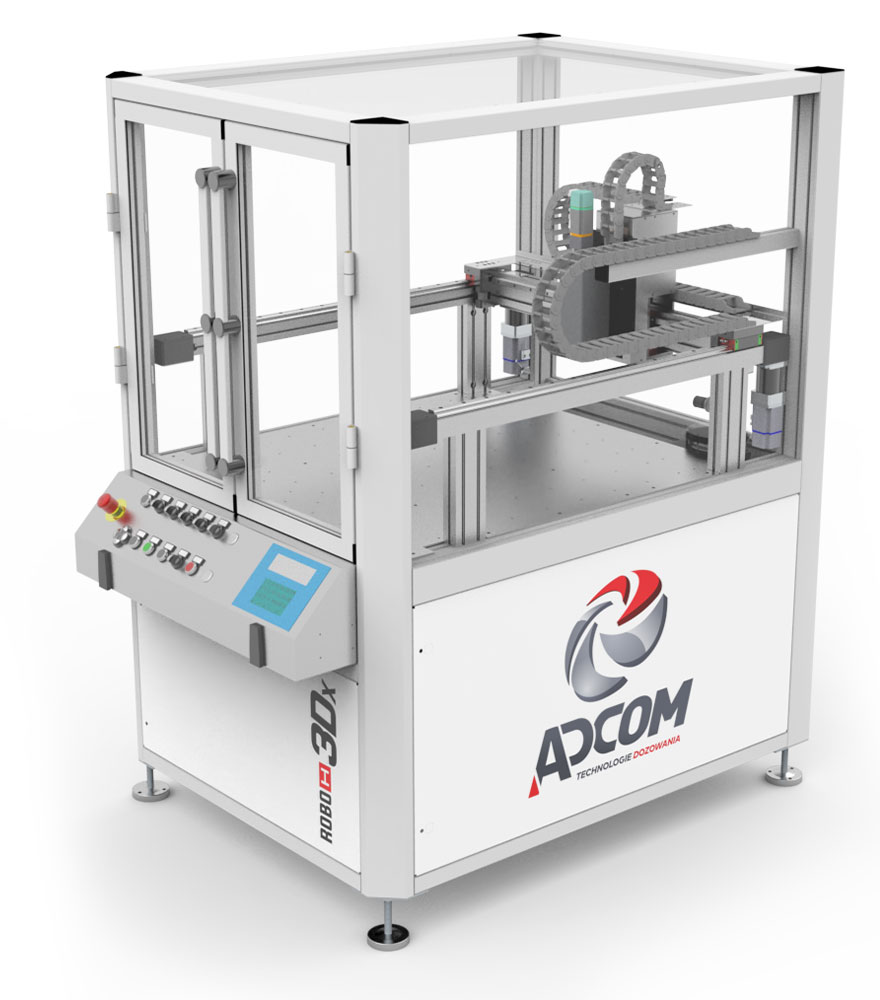
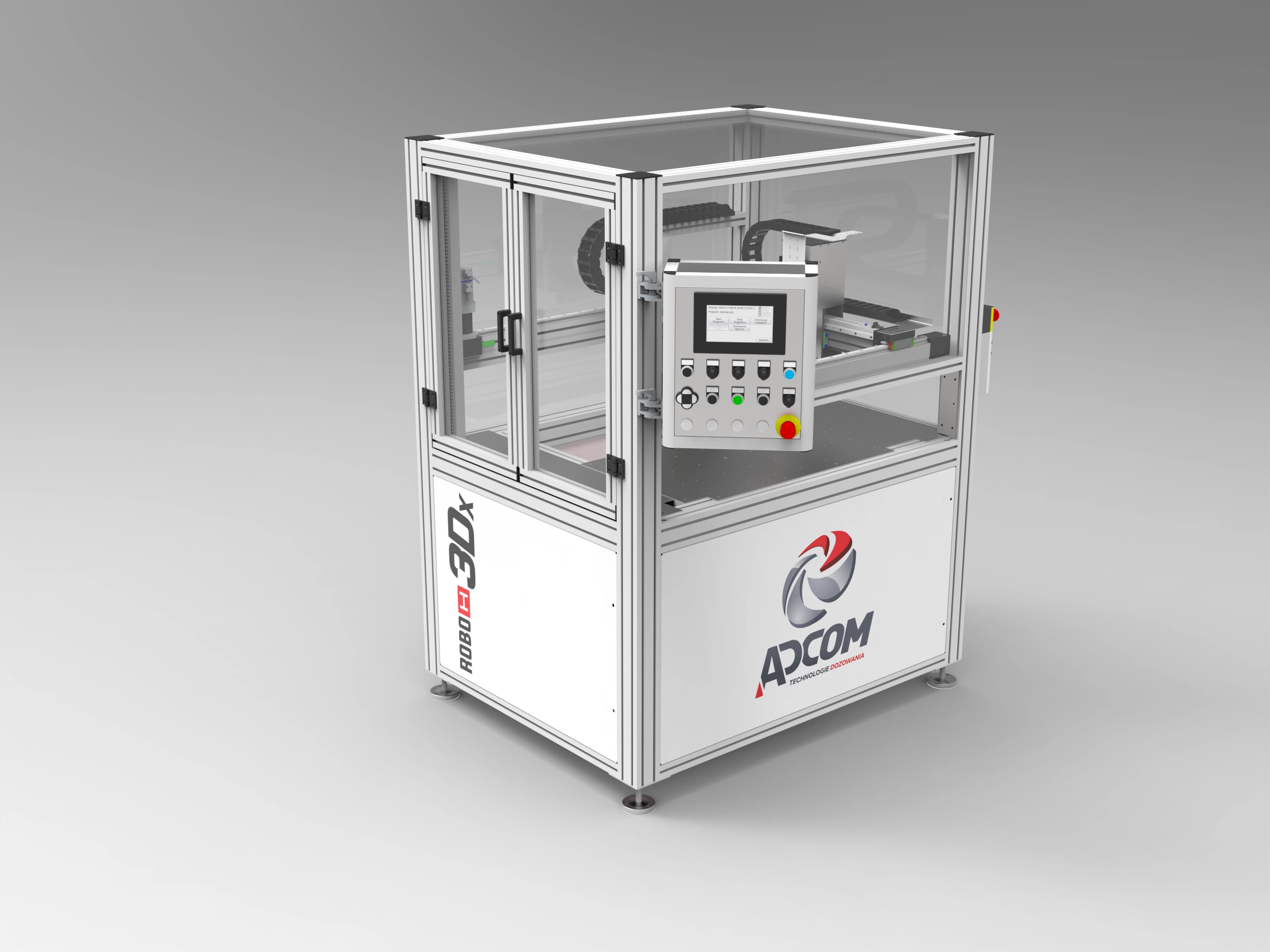
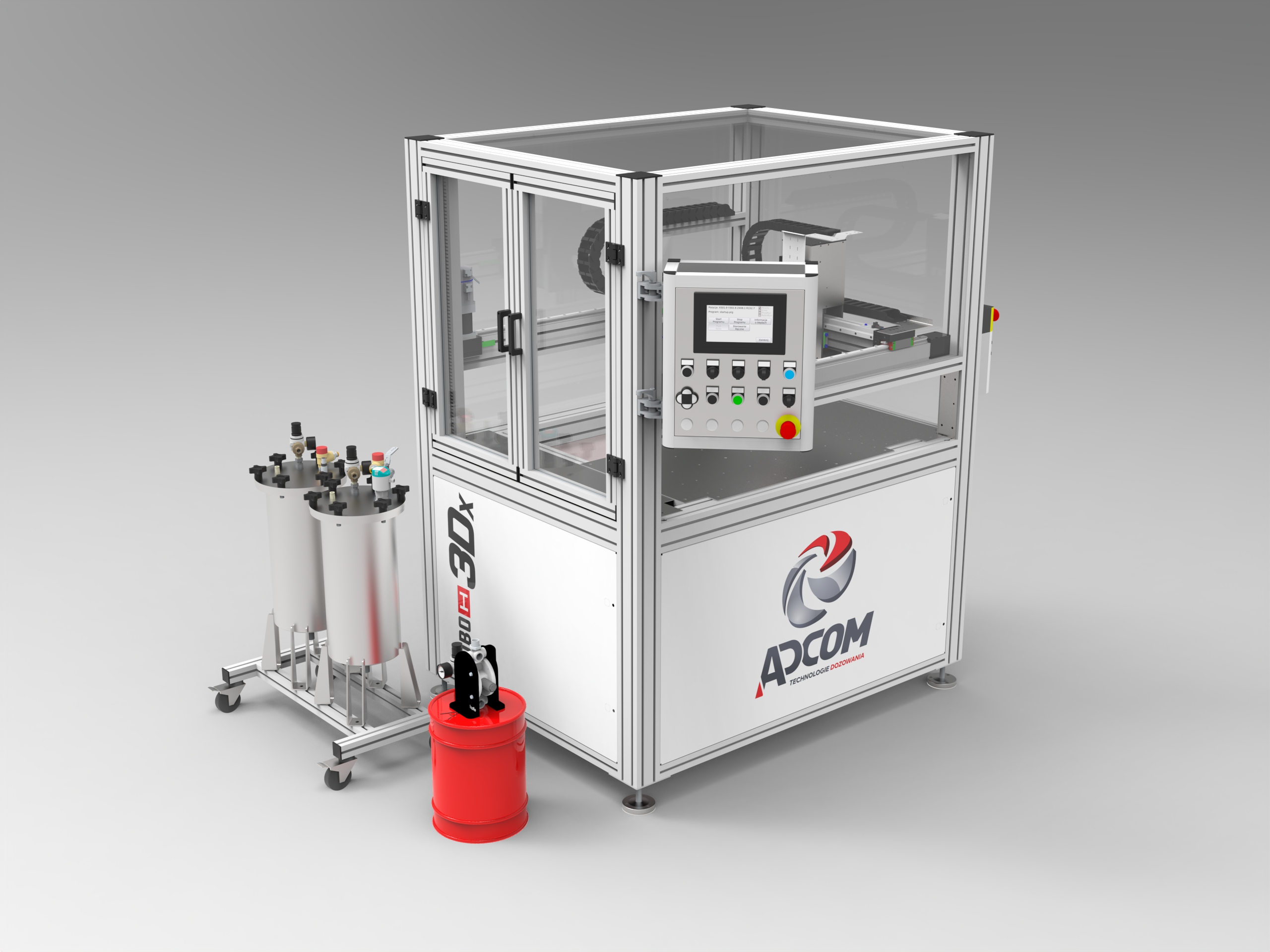
Robotic selective conformal coating.
The effectiveness of a protective coating depends on the precision of its application, and selective coating systems must ensure a high level of repeatability in both coating shape and thickness. These requirements are guaranteed through process automation using robots in the coating process. Robotic selective coating systems are used in high-volume production, single-unit manufacturing, as well as in prototyping applications.
Fluorescent properties of coatings.
The fluorescent properties of selected coatings significantly influence their application across various industrial sectors. Fluorescent coatings contain special markers that emit light when exposed to appropriate UV illumination. They are used by operators and vision systems to verify process correctness or detect defects. In the event of coating damage, changes in fluorescence intensity may indicate issues such as cracks or structural defects, enabling rapid identification.
Conformal coating = cost optimization.
Conformal coating plays a key role in modern electronics manufacturing, enabling a significant reduction in material consumption. Thanks to the precise application of coating only to designated areas of printed circuit boards (PCBs), manufacturers can minimize waste, resulting in higher production efficiency.
Reduced material consumption not only results in cost savings but also minimizes waste generation. In the face of increasing pressure for sustainable development and environmentally responsible manufacturing, eliminating unnecessary components and materials is becoming a key element of many companies’ strategies.
Conformal coating also enables the use of more environmentally friendly coatings tailored to the needs of the electronics industry. These coatings may feature a lower solvent content. The selection of such materials supports efforts to reduce the carbon footprint, which is not only beneficial for the environment but also enhances a company’s image in the eyes of consumers who increasingly consider sustainability principles when choosing products.
Materials used in conformal coating.
Acrylic coatings are among the most commonly used materials due to their favorable balance between cost and protective properties. They offer good resistance to moisture and abrasion. Once cured, they form a transparent layer, which facilitates visual inspection of electronic components. These coatings are easy to apply and can be deposited using various methods, including spraying and dipping. A key advantage is their ease of reworkability-acrylic coatings can be readily removed using solvents, which simplifies equipment servicing. Due to these properties, acrylic coatings are widely used in electronics and industrial equipment where environmental protection requirements are moderate.
Silicone coatings are used in applications where high temperature resistance is required. These coatings can withstand temperatures of up to 200-250°C, making them an ideal choice for electronics used in the automotive and aerospace industries, as well as other sectors requiring high thermal protection. They offer good chemical resistance and moisture resistance. Thanks to their flexibility, they effectively accommodate mechanical stresses caused by thermal expansion and contraction of materials. However, due to their elastic properties, silicone coatings are not highly resistant to abrasion. Their removal is difficult and often requires specialized solvents and long exposure times. Silicone coatings are commonly used in high-humidity environments, such as outdoor applications and marking systems.
Polyurethane coatings, once cured, form a hard, abrasion-resistant layer, making them well suited for applications where printed circuit boards are exposed to mechanical damage. They offer high resistance to moisture and are also highly resistant to chemicals such as solvents, making them an ideal choice for industrial environments with high chemical aggressiveness. Polyurethane protective coatings are widely used in the aerospace industry, where exposure to fuel vapors is a common issue.